USDai: A Stablecoin That Wants to Be a GPU Landlord, and the Math Doesn't Quite Pencil Out Yet
 kev_larFounder & Lead Developer
⚠️ Not financial advice. This post is for informational and educational purposes only. Forecasts and commentary are model outputs and opinions, may be inaccurate, and are not a recommendation to buy or sell any security or asset. Do your own research. AI-assisted: this article was drafted with AI and reviewed by a human before publishing.
 # USDai: A Stablecoin That Wants to Be a GPU Landlord, and the Math Doesn't Quite Pencil Out Yet
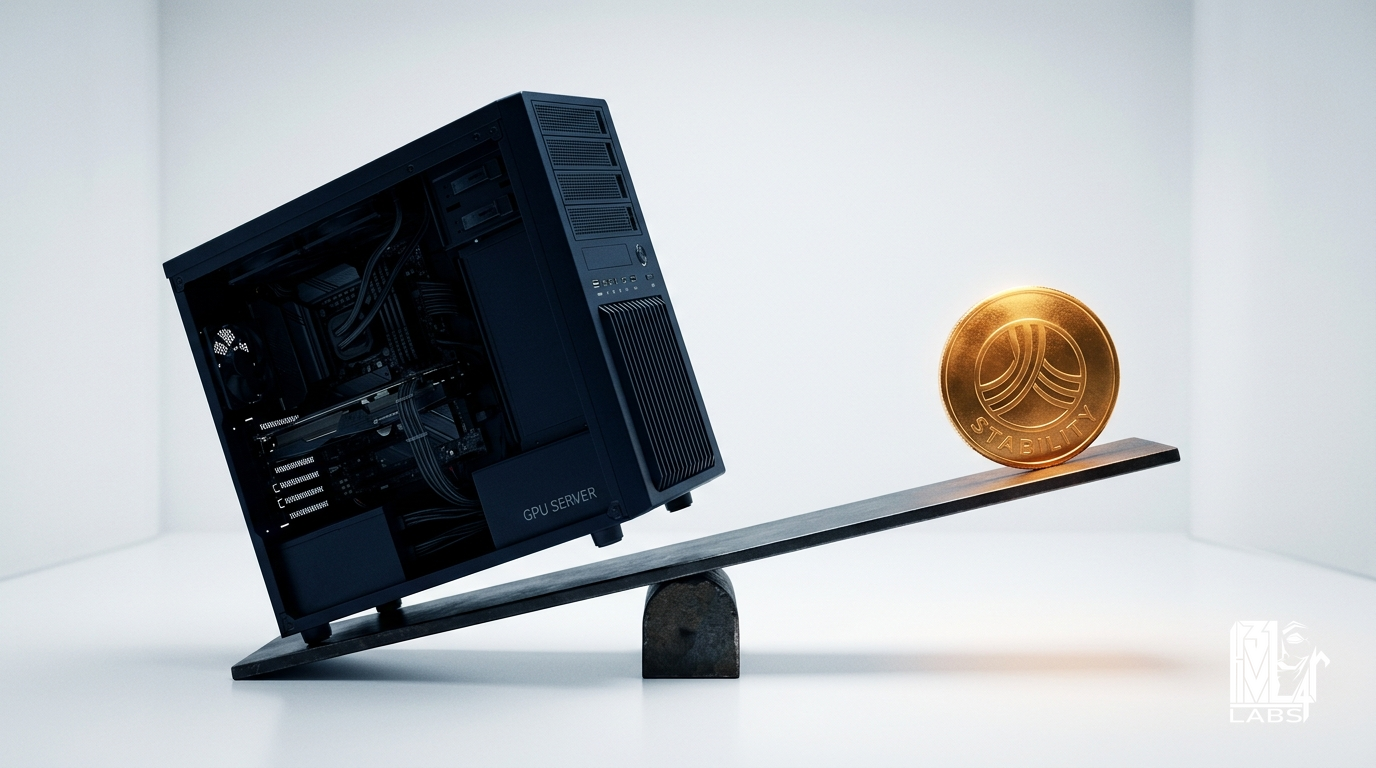
Here's the pitch: take the most volatile, hype-saturated corner of crypto — AI tokens — and bolt it onto the least volatile, most boring corner of crypto — stablecoins. That's USDai (AI-USD) in a nutshell. It's a lending protocol that lets GPU operators tokenize their hardware and borrow against it, dressed up in stablecoin clothing. Clever idea. The execution, as of mid-August 2026, is a lot messier than the pitch deck.
Let's start with what's actually working. USDai has real institutional fingerprints on it — Wintermute's reported $1 billion commitment, a Chainlink integration for the tokenization plumbing, and a PayPal yield partnership that gives it something most AI tokens don't have: an actual, non-speculative revenue stream. In a sector where most projects are running on vibes and Discord hype, that's a meaningful differentiator. It's also part of a broader wave that's real — the AI token category cracked $20 billion in market cap this year, and the underlying AI infrastructure buildout it's feeding off is not fictional. Big Tech capex on AI blew past $700 billion in 2026, and Nvidia's most recent earnings call kept banging the "end-of-decade infrastructure investment" drum. USDai is at least plugged into something with real capital behind it, not just a Discord and a dream.
Compare that to the rest of the AI-token zoo, and USDai has genuinely looked like the adult in the room — steadier price action while other AI coins whipsaw on pure narrative. That relative calm has probably pulled in risk-averse money looking for AI exposure without the meme-coin stomach acid.
Now here's where I stop nodding along.
Eighty percent of the token supply is still locked. Sit with that number. Four-fifths of this thing hasn't even hit the market yet. Every unlock event from here forward is a loaded gun pointed at the price, and "loaded gun" is not a phrase I use lightly about an asset that's marketed with stablecoin-adjacent vibes. Traditional stablecoins don't have supply-unlock cliffs because they're not supposed to behave like this in the first place — that tension alone tells you USDai is really a leveraged bet on GPU-collateral lending wearing a stablecoin costume.
Which brings us to the actual business model. The bear case isn't exotic — it's the same story crypto lending has told a dozen times before: promotional yields are propping things up now, and the real question is whether organic GPU-lending revenue can replace them once the training wheels come off. If it can't, TVL bleeds, confidence cracks, and the peg — the entire reason anyone would treat this as a "stable" asset — comes under real pressure. Layer on top of that the fact that the collateral itself is depreciating silicon. GPUs age fast. A new vintage chip (hello, B200 and whatever comes after) can make yesterday's collateral worth meaningfully less overnight. Tokenizing a wasting asset as loan collateral is a genuinely novel risk with zero historical precedent to lean on.
Technically, the picture backs up the caution. Price action has been surging into resistance around 0.0230 with signs of exhaustion, and 0.0212 is the line in the sand — a clean break below it looks like the setup for a sharp retracement, not a dip to buy. Sentiment, meanwhile, is reading nearly 100% bullish crowd positioning, which in this business is usually less a signal and more a warning label.
Zoom out and the macro backdrop isn't offering cover either — the IMF has flagged AI-boom sustainability as a systemic risk, and Bloomberg's own commentary from July put it bluntly: the vertical-ascent phase of AI tokens is probably over, with "trouble brewing" underneath the surface.
My take: USDai is a legitimately interesting idea sitting on top of a genuinely fragile structure. Institutional backing and real yield give it a floor other AI tokens lack, but an 80%-locked supply and an unproven transition to organic revenue mean the downside case isn't theoretical — it's mechanical. This is a watch-from-the-sidelines name until the unlock schedule clarifies and the peg proves it can survive without training-wheel yields. Conviction here is low for a reason. Don't confuse "less chaotic than its peers" with "safe."
More on AI-USD
Market commentary from the K3vl4r desk — not personalized investment advice. More posts →