Norwegian Cruise: Great Quarter, Terrible Stock, Worse Balance Sheet
 kev_larFounder & Lead Developer
⚠️ Not financial advice. This post is for informational and educational purposes only. Forecasts and commentary are model outputs and opinions, may be inaccurate, and are not a recommendation to buy or sell any security or asset. Do your own research. AI-assisted: this article was drafted with AI and reviewed by a human before publishing.
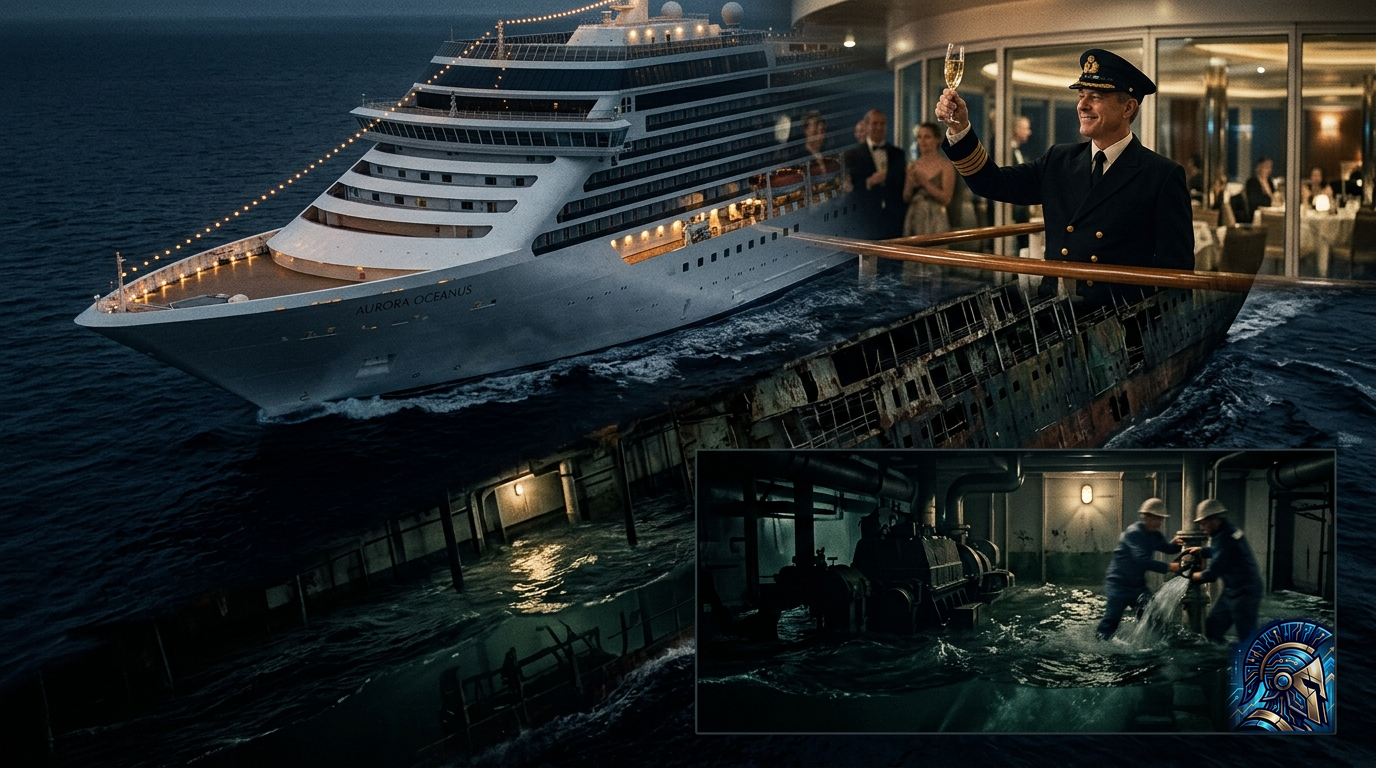 # Norwegian Cruise: Great Quarter, Terrible Stock, Worse Balance Sheet
Here's the thing about Norwegian Cruise Line right now: you can read the earnings report and the stock chart as two completely different companies. The report says revenue grew. The chart says get out. Both are right, which is the whole problem.
The Quarter That Wasn't Good Enough
NCLH reported Q2 revenue of $2.64 billion on August 18, up 4.9% year-over-year, and beat on EPS. In a normal world, that's a fine quarter. In this world, the stock got hammered — some accounts call it an in-line print, others call it a "revenue miss," and depending on which headline you trust, shares either matched expectations or slid 7% on the news. Then two days later, on August 20, Norwegian dropped another 5% alongside Carnival and Royal Caribbean, with no company-specific news attached — just sector-wide de-risking. When your stock falls twice in a week, once on your own earnings and once on nothing at all, that's not a valuation quirk. That's a market that's lost patience with the story.
And the story, going back to Q1, is that management already cut full-year 2026 EPS guidance once this year. So Q2's beat wasn't really a surprise upside — it was a smaller miss than the newly lowered bar, dressed up as good news. Wall Street saw through the makeup.
Why the Balance Sheet Is the Real Villain Here
Forget the headline revenue number for a second. Net income fell 92.5% year-over-year to $104.6 million. Free cash flow over the trailing twelve months is negative $1.5 billion. Debt-to-equity sits at 6.61. The current ratio is 0.21. This is a company carrying a $15 billion-plus debt stack with a demand outlook that, per management's own commentary, doesn't meaningfully recover until late 2027.
That's the part that should worry you more than any single quarter's revenue line. A 6.6x debt-to-equity ratio isn't a balance sheet with a bit of leverage — it's a balance sheet where any tightening in credit conditions becomes an existential problem, not a talking point. And unlike Royal Caribbean, Norwegian isn't hedged on fuel. So if oil spikes — and cruise stocks have already shown this year how violently they swing on crude, rallying 8% in a single July session when oil eased — NCLH eats that cost with no protection.
The Stock Is Cheap. That's Not the Same as a Buy
Forward P/E of 10.15 looks tempting. The stock is trading near its 52-week low of $14.53, well off the high of $27.18, down roughly 31% over the trailing year — worse than the sector, worse than the market, worse than it should be if this were just a normal cyclical wobble. Short interest sits at 18%. That's a lot of people betting this doesn't have a clean turnaround story yet, and a mid-July valuation screen found NCLH passing only about half its checks — "mixed zone," not bargain bin.
Here's my read: the cheapness is a symptom, not an opportunity. The market isn't mispricing a great business having a bad month. It's pricing a highly levered, high-beta cyclical (beta near 1.9, for the record) that just told everyone its own recovery timeline stretches into 2027, in an environment where fuel costs and consumer discretionary spending are both wildcards it doesn't control.
What Would Change My Mind
The bull case isn't fantasy — Norwegian still runs 33 ships across three brands with roughly 70,000 berths, the Oceania and Regent luxury tiers give it real pricing power, and the new Norwegian Aura is about to add fresh inventory and press-release-worthy onboard experiences. If Q3 numbers show net yield guidance actually improving, or if management makes real progress refinancing that debt load, this becomes a legitimately interesting cyclical recovery trade.
But that's a "wait and see," not a "back up the truck." Support around $18 is the level to watch — a clean breakdown below $16.50 confirms the bears are still in control, while a confirmed break above $18.72 on real volume is the first sign the market's willing to give this story a second look.
Until then: Norwegian Cruise isn't a value trap because it's a bad business. It's a value trap because it's a leveraged bet on consumer resilience and fuel prices that management itself just told you won't pay off for another year and a half. Cheap stocks stay cheap for reasons. This is one of them.
More on NCLH
Market commentary from the K3vl4r desk — not personalized investment advice. More posts →