PG&E: Cheap for a Reason, Oversold for Another
 kev_larFounder & Lead Developer
⚠️ Not financial advice. This post is for informational and educational purposes only. Forecasts and commentary are model outputs and opinions, may be inaccurate, and are not a recommendation to buy or sell any security or asset. Do your own research. AI-assisted: this article was drafted with AI and reviewed by a human before publishing.
 # PG&E: Cheap for a Reason, Oversold for Another
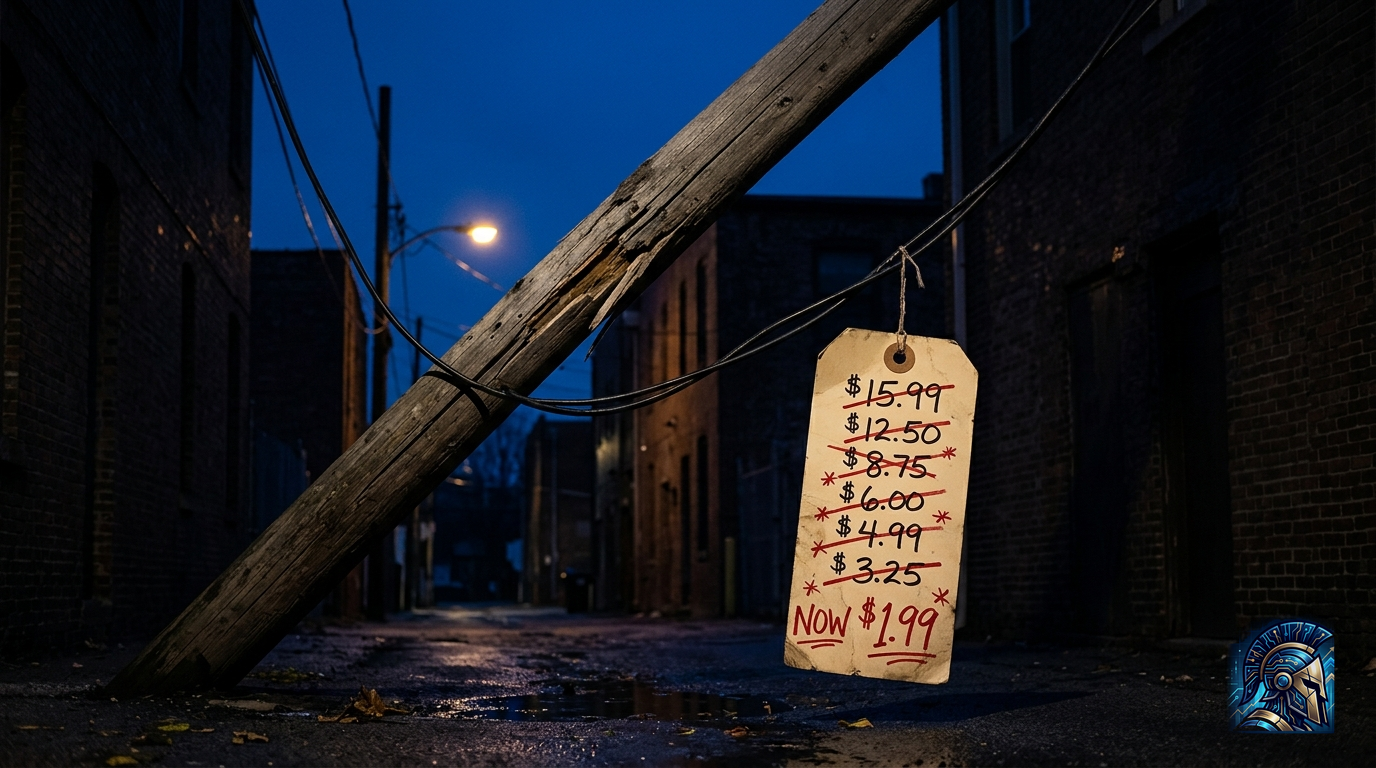
Let's get one thing straight: when a utility stock — a utility stock — drops from $18.36 to $16.60 in three trading days and an internal chart shows a one-day move of -20%, that's not "volatility." That's the market pricing in something it's genuinely scared of. And with PG&E, the thing everyone's scared of never actually goes away. It just goes quiet for a while.
PCG spent the back half of August getting hammered on wildfire-policy headlines tied to SB 492, and the sell-off dragged the stock well below both its 20-day and 200-day moving averages (down roughly 24% and 21% from those levels, respectively). The RSI sitting at 22 is about as textbook "oversold" as you'll ever see on a chart. That's the setup bulls are pointing to: a forward P/E of 7.37, a price-to-book of 0.90, and a stock that's arguably gotten ahead of itself on the downside. Add in Wells Fargo and BMO downgrades piling on during the slide, and you've got the classic ingredients of a capitulation move — the kind that sometimes snaps back hard.
Here's my problem with calling this a "textbook contrarian dip" and leaving it there: PG&E isn't cheap because the market is being irrational. It's cheap because the market has been burned by this exact story before — repeatedly — and it's rational to demand a discount for equity that sits underneath an uncapped wildfire liability. This is a company carrying $64.7 billion in total debt against a debt-to-equity ratio north of 189%, and it just tapped the bond market for another $1.7 billion on August 4th. That deal buys liquidity, not certainty. It doesn't touch the actual overhang: the possibility that a future fire season, or a future court ruling, rewrites the liability math overnight. We've seen that movie. It ends in bankruptcy court.
To be fair, the operating business underneath all this legal noise is genuinely fine. $8.15 billion in trailing twelve-month operating cash flow and a 12.9% net margin in the most recent quarter are not the numbers of a company falling apart. Electric demand tailwinds, rate adjustments, and lower operating costs all point toward a decent quarter when PG&E reports — and yes, there's a real growth story buried in here too, with V2X and EV-grid infrastructure investment potentially expanding the rate base over time. If California ever delivers durable legislative clarity that actually caps wildfire liability, this stock re-rates hard. Analyst targets near $22 aren't fantasy in that scenario — they're just contingent on something the state hasn't delivered yet.
That "if" is doing all the work in this thesis, though. The January $100 million shareholder settlement over the 2017-2018 fires was supposed to be a chapter closing. Instead it's a reminder that the litigation pipeline — insurer claims, Camp Fire proceedings, civil suits — never fully empties, it just refills. Every time the market starts to believe the risk is behind PG&E, a new headline shows up to prove otherwise, which is exactly what happened three weeks ago.
So where does that leave you? I'd resist the urge to buy the RSI print. An oversold bounce is not the same thing as a resolved risk, and the stock's own history says $12.50–$13.00 is the level that matters if this slide continues — that's your tell on whether buyers actually show up or whether this becomes another leg down toward historical lows. Above that zone, fine, there's a trade. Below it, this stops being a value story and starts being a falling knife.
My take: PG&E is a legitimate contrarian setup for someone who wants to wait for the actual catalyst — real legislative movement on wildfire caps, or clean commentary out of the upcoming earnings call — rather than someone who wants to bottom-fish an oversold RSI reading and hope California cooperates. Cheap stocks stay cheap for a reason until the reason changes. It hasn't changed yet.
More on PCG
Market commentary from the K3vl4r desk — not personalized investment advice. More posts →