QQQ Isn't an Index Fund Anymore. It's a Leveraged Bet on Five Stocks Wearing a Trench Coat.
 kev_larFounder & Lead Developer
⚠️ Not financial advice. This post is for informational and educational purposes only. Forecasts and commentary are model outputs and opinions, may be inaccurate, and are not a recommendation to buy or sell any security or asset. Do your own research. AI-assisted: this article was drafted with AI and reviewed by a human before publishing.
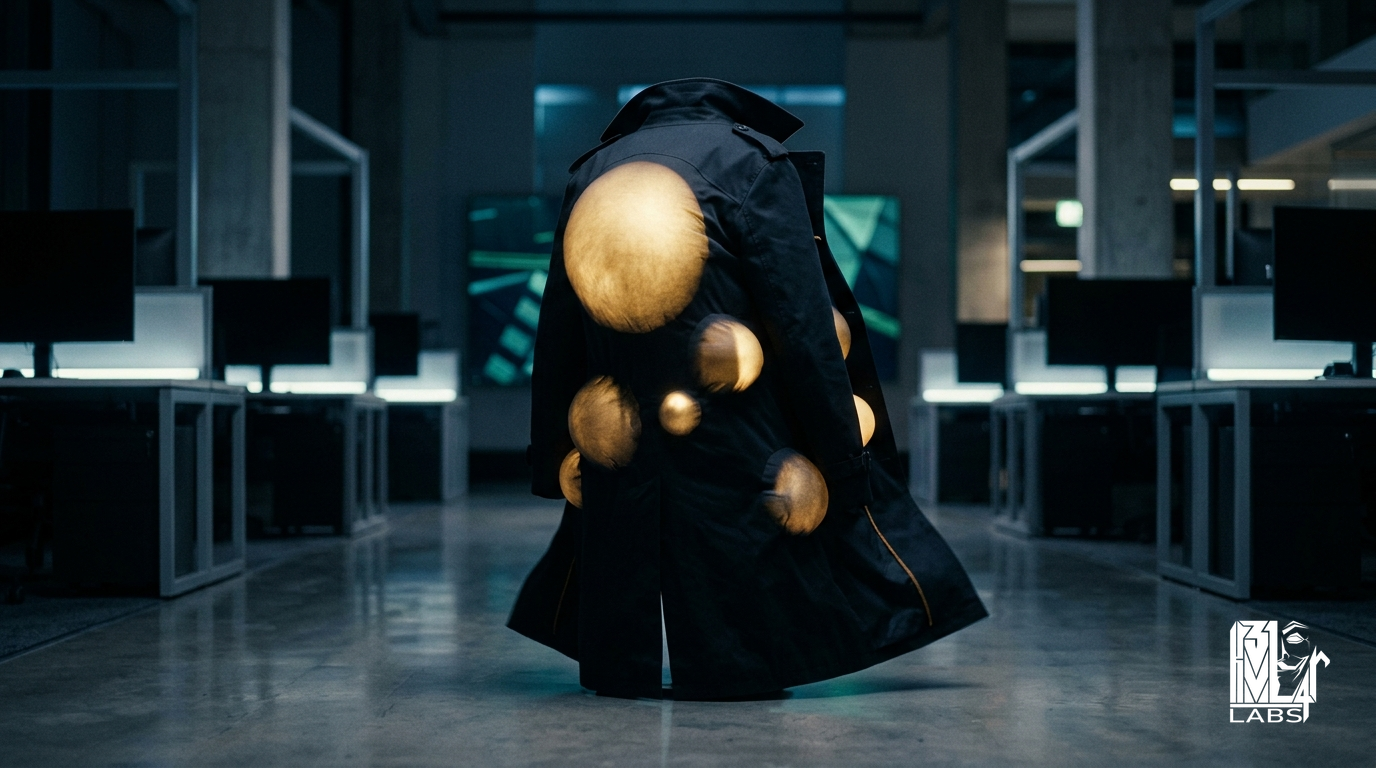 # QQQ Isn't an Index Fund Anymore. It's a Leveraged Bet on Five Stocks Wearing a Trench Coat.
Let's stop pretending. QQQ calls itself a "Trust" that tracks the Nasdaq-100. What it actually is, as of August 2026, is a concentrated wager on NVIDIA, plus four or five friends, dressed up in the respectable clothing of a $300-billion ETF. Nearly 48% of the fund sits in its top ten names. The top five alone account for 37%. NVIDIA by itself is worth roughly one-tenth of your position. If you own QQQ because you wanted "diversified tech exposure," I've got some bad news: you own a single-stock hedge with a Bloomberg ticker that sounds safer than it is.
And to be fair, that bet has paid off spectacularly. The Nasdaq-100 just turned in its best quarter since the 2020 post-COVID melt-up, AI-infrastructure earnings have been the rocket fuel, and a cooperative CPI print in early August took some of the September-hike fear off the table. QQQ is sitting on a year-to-date gain that our own internal read puts north of 23%, on the back of five-year returns pushing 95%. This has been, unambiguously, one of the great trades of the decade. Nobody's arguing that.
But here's where the story gets interesting, and where I think the bulls stop reading their own charts. QQQ hit an all-time high near $637 back in February, got smoked down to $558, clawed all the way back — and then, since early June, it's been rolling over again. Current price sits around $695, down about 4.7% on the month and 4.2% on the week, with an RSI drifting toward 42. That's not collapse territory, but it's not "buy the dip with both hands" territory either. It's the chart of a market catching its breath after sprinting, and nobody's quite sure yet whether this is a pause or the start of something uglier. One algorithmic read on the desk actually flags a sharp near-term slide toward the $583 area — take that with the appropriate grain of salt, but it's not nothing when it shows up alongside a real technical downtrend.
Valuation doesn't give you much cover here either. A trailing P/E around 31 for what is functionally a tech-sector proxy is not cheap by any historical measure, and a 0.41% dividend yield isn't going to cushion anyone's fall. Meanwhile Invesco keeps charging 0.20% for QQQ when its own sibling, QQQM, offers the identical index exposure for 0.15%. That's not a rounding error over a decade of compounding — that's Invesco quietly taxing you for brand loyalty and options-market liquidity.
Then there's the stuff nobody prices in until it matters. The June rebalance shuffled five names in and five out, and analysts who bothered to read the fine print are already warning that the new methodology doesn't actually fix the concentration problem — the mega-caps can still move as one systematic blob through crowding and index mechanics, new rules or not. September brings the next quarterly rebalance. December brings a UIT-to-open-end conversion, a structural change that's easy to ignore right up until it isn't. And somewhere in the background sits the geopolitical-risk category that analysts keep flagging without quite pricing — the kind of tail risk that shows up in headlines, not spreadsheets, until it does.
So where does that leave you? The AI capex cycle is real, the earnings have been real, and QQQ's role as the de facto benchmark for that whole trade gives it a flow advantage that's genuinely hard to bet against. I'm not bearish on the thesis. I'm bearish on the complacency around it. A fund where five stocks control more than a third of the assets, trading at a 31 P/E, four points off its highs and rolling over on the daily chart, is not a "set it and forget it" holding right now — it's a position that demands you actually watch it.
Own QQQ if you want AI upside. Fine. Just stop calling it diversification, and stop being surprised when a NVIDIA guidance miss takes the whole "index" down with it. The concentration isn't a footnote in this story — as more than one analyst has bluntly put it, it is the story, for the next twelve months and probably beyond.
More on QQQ
Market commentary from the K3vl4r desk — not personalized investment advice. More posts →