MIR — AI Stock Forecast & Price Targets
Published 8/12/2026 · A free sample of K3vl4r’s AI-powered analysis.
Kronos price forecasts, scored fundamentals & technicals, and a multi-horizon plan.
View the live MIR price forecast →
MIR combines genuine secular tailwinds (nuclear buildout, radiation detection demand) with ~20% revenue growth and a strong order book, but the stock trades at 173x trailing / 23x forward earnings with thin 2.4% net margins and just posted a Q2 revenue miss. With price at $15.07 sitting -27% below the 200-day SMA and 14.6% short interest, the setup is a speculative HOLD/small ACCUMULATE — the story is real but valuation and margin conversion still need to catch up.
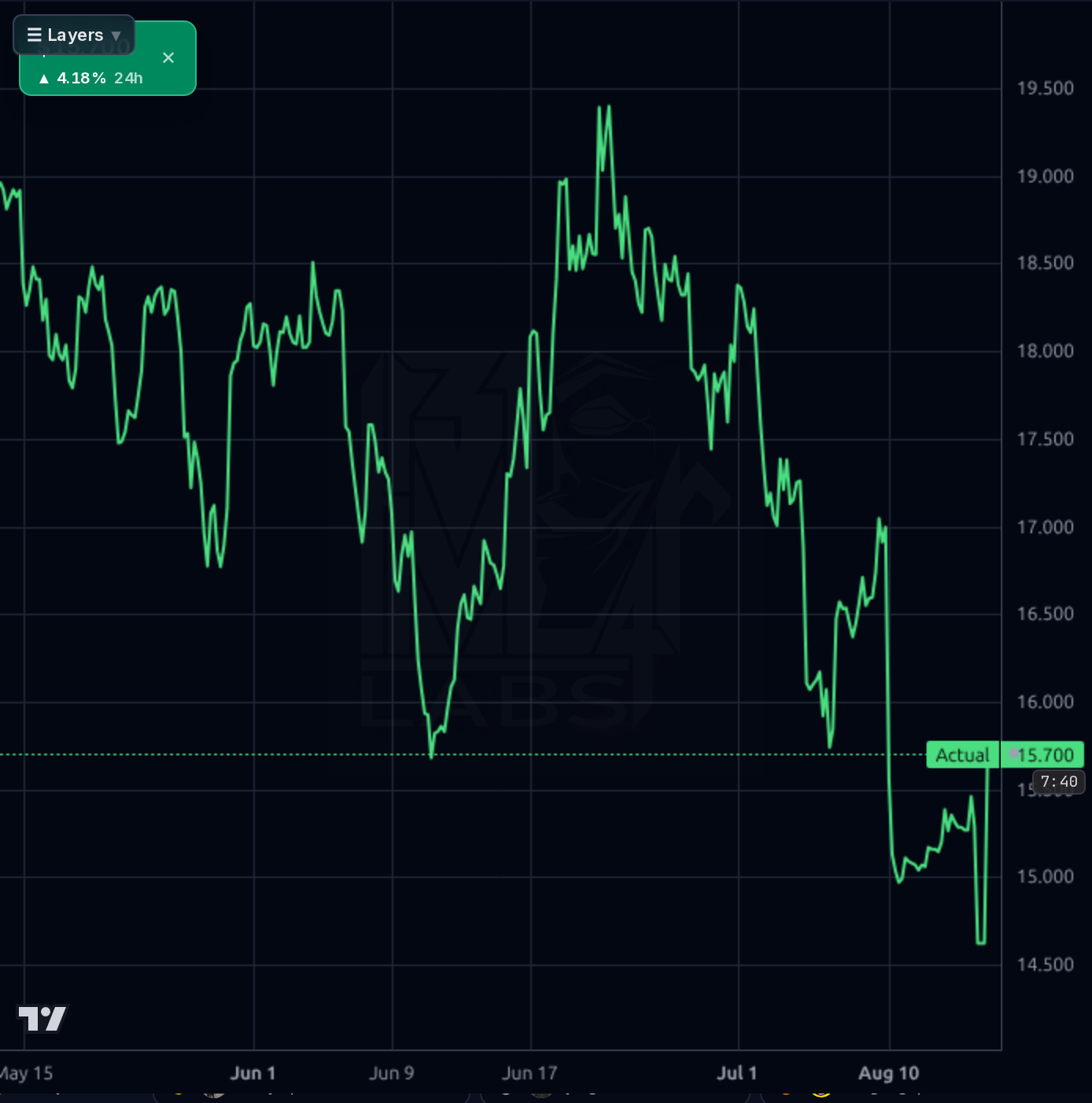
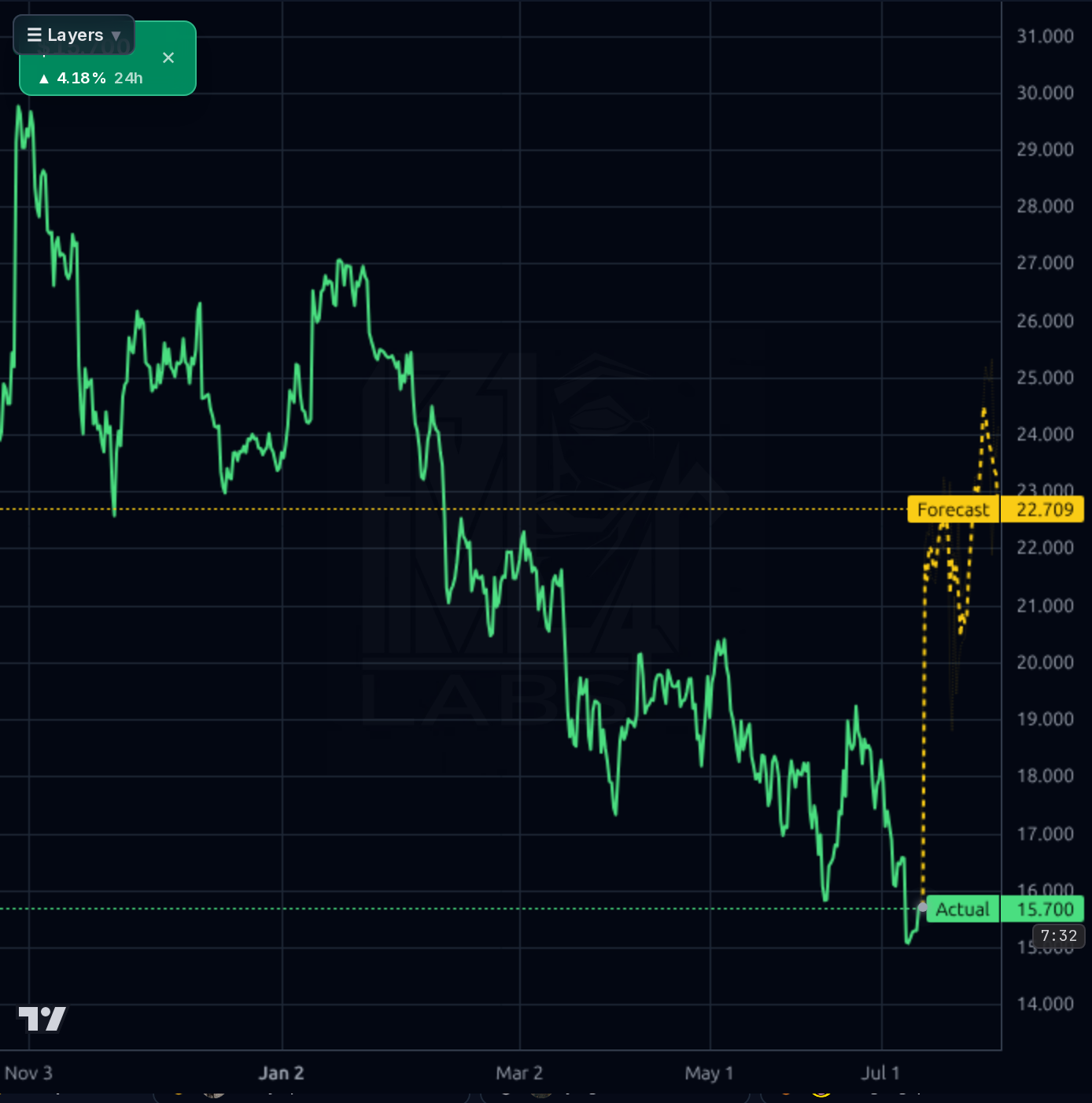
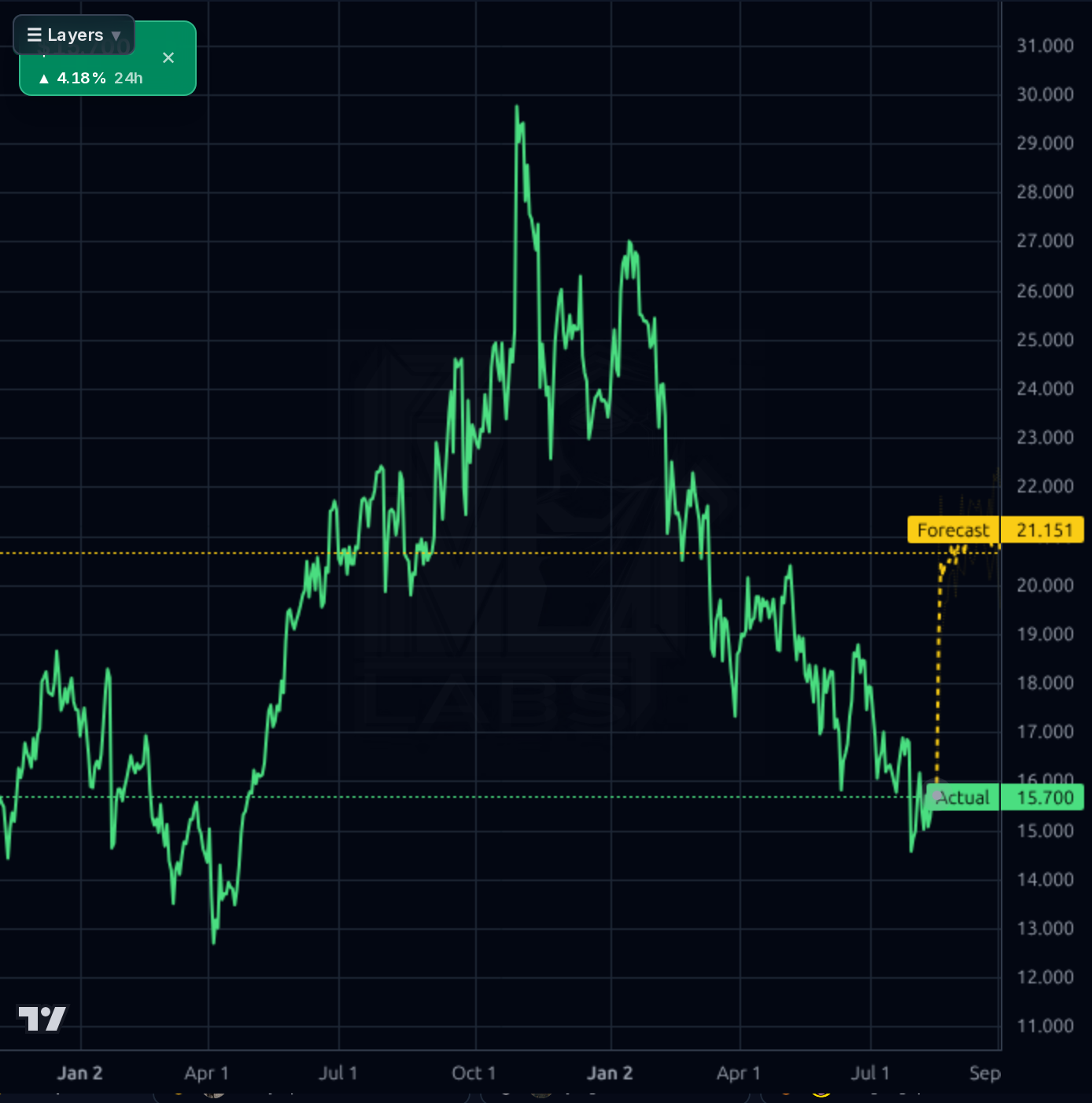
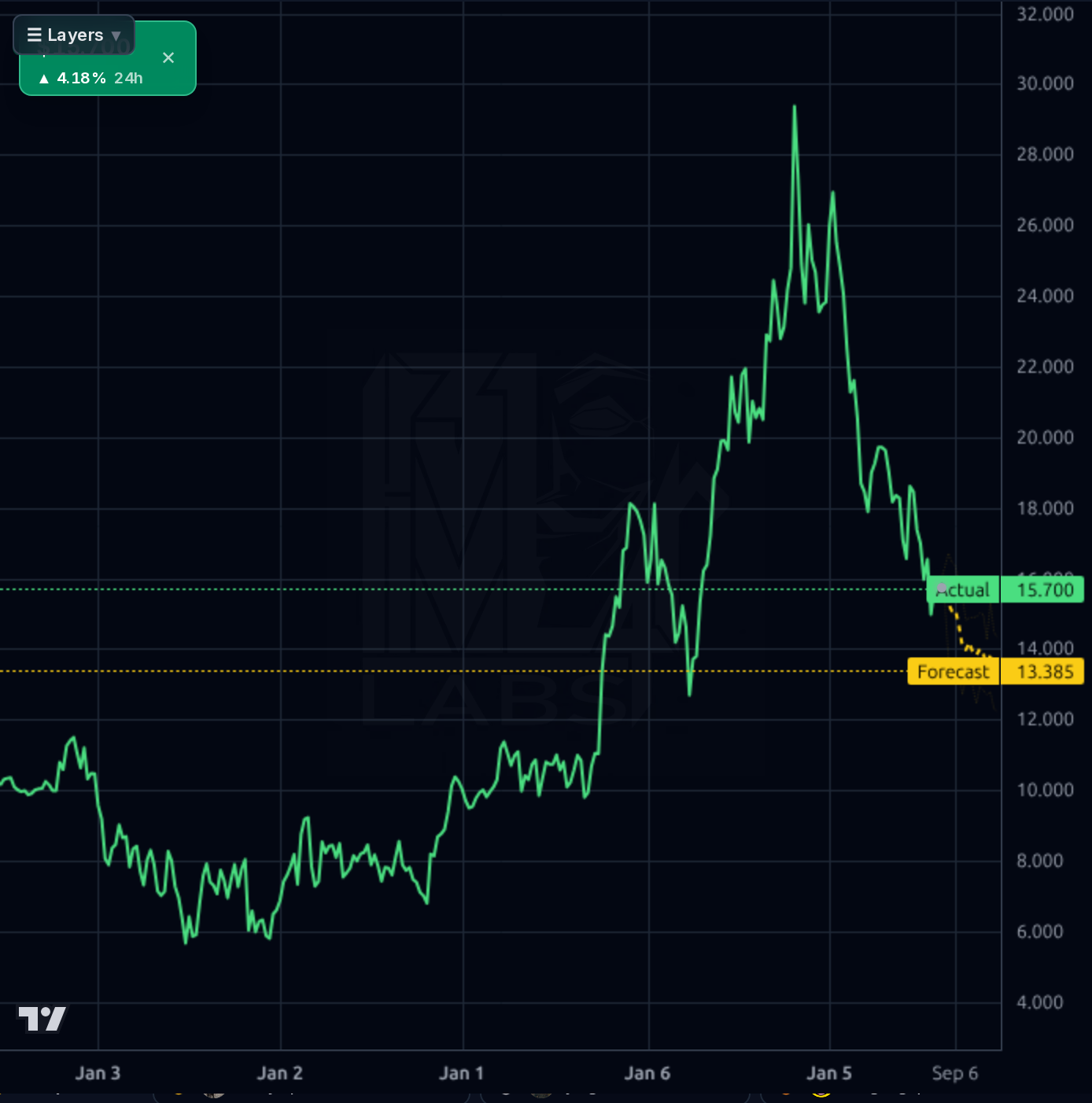
Over the next 1-4 weeks the tape is trying to base between $14.11 (52-wk low) and $16.16. Preferred action: small starter position only if price holds above $14.80 on a closing basis, with stop at $13.90 (below the 52-wk low invalidates the base). Do NOT chase strength into $16.50+ without confirmation — the more reliable 1wk model forecast is actually bearish ($13.4), and the 1d bullish forecast has failed statistically. If a bounce reaches $17.00 resistance without volume expansion, trim. Sizing: 1/3 of intended full position; keep dry powder for a retest of the low.
Over 1-6 months the thesis is that ~20% revenue growth, a $241M core order book, and the nuclear/AI power tailwind translate into margin expansion and a re-rating back toward the $19-21 zone (still well below prior analyst PTs). Expected return range: -10% to +35% from $15.07. Key catalysts: Q3 2026 earnings on 10/27 (must show operating margin >7% and organic orders +>15%), any incremental nuclear contract wins, and rate-cut trajectory. What would change my mind: (a) Q3 organic revenue growth decelerates below 5%, (b) operating margin compresses below 5%, or (c) close below $13.90 on volume. Rating this leg: ACCUMULATE on weakness, not on breakout.
Over 1-3 years MIR is a levered play on the global nuclear renaissance (SMRs, reactor life-extension, medical radiation therapy) and AI-driven power infrastructure. If management can convert the acquisition-heavy top-line into 12-15% operating margins and drive ROIC above cost of capital, forward EPS of ~$0.66 can compound toward $1.20-1.50 and a $22-30 stock is defensible. The biggest structural risk is that MIR is essentially a roll-up: 42% order growth vs. 19% core means the incremental growth is bought, not earned — integration failure, goodwill impairment, or a debt refinancing at higher rates in a slowing capex cycle could break the model. Secondary risk is regulatory/geopolitical sensitivity in nuclear end-markets.
Revenue trend is genuinely accelerating: Q2 2026 came in at $266.8M (+19.7% YoY) with TTM sales of $1.025B and Sales Q/Q +19.69%, though the quarter missed consensus by ~1.8%. Gross margin held near 49% (Q2 gross profit $133.1M) but operating margin remains thin at 6.7% and net margin only 2.9% ($7.7M Q2 net income), which is why trailing P/E is a nosebleed 173x versus a much more digestible 23x forward. Balance sheet is adequate but not pristine — $418.7M cash against $1.233B total debt (D/E 0.68, LT D/E 0.67); current ratio 3.20 and quick ratio 2.63 provide runway. Cash conversion improved meaningfully — Q2 operating cash flow of $58.5M and FCF of $48.1M vs. Q1's weak $9.4M FCF suggests seasonality plus real conversion. EBITDA of $220M TTM against enterprise value $4.66B gives EV/EBITDA of 21x — not cheap for a business with 1.5% ROE and 0.8% ROIC. What's working: top-line growth, gross margin, order book (+42% incl. M&A). What's broken: bottom-line quality is still M&A-driven, GAAP net income declined YoY on the quarter per third-party coverage, and returns on capital remain sub-cost-of-capital.
Trend is decisively down across the intermediate frame: on the 1d chart price collapsed from the Jan/Feb highs near $30 into a $14-16 base, and now sits at $15.07 — 27.4% below the 200-day SMA, 8.9% below the 50-day and 3.6% below the 20-day, with RSI 43.7 (neutral-weak, not yet oversold). The 1h chart shows a sharp intraday flush to ~$14.50 followed by a rebound to $15.70, forming a potential short-term double-bottom/capitulation candle near the June $15.00 pivot. Key support is the $14.11 52-week low and psychological $14; resistance stacks at $16.16 (recent breakdown), $17.00, and then the $19-20 supply zone. The model's own forecasts are inconsistent: 4h and 1d bands project +30–45% into the $21-22 zone but 1wk projects a lower drift to $13.4 — and critically the 1d directional accuracy has been 36% vs. a 67% naive baseline (MAPE 29%), meaning the aggressive bullish 1d forecast is unreliable and should be heavily discounted. The 1wk forecast (83% accuracy, 4% MAPE) is the more trustworthy signal and it's bearish. Net: technicals argue for base-building, not chase.
Signal: Q2 2026 (reported 7/28) delivered +19.7% revenue growth to $266.8M and a +20% EPS beat, with Q1 total orders +42% including M&A — this is the crux of the bull case and it is corroborated by primary IR disclosure and the 8-K. Analyst posture is mixed-to-supportive: Citi and B. Riley both reiterated Buy but cut targets ($28→$24 and $29→$27 respectively), and the fundamental-change feed flagged a consensus PT reduction from $27.30 to $25.10 — bullish rating, softer price. Consensus target of $24.60 implies ~60% upside but analysts have been trimming, not raising. Noise/mixed: Institutional selling (Nicholas Investment Partners cut ~592k shares in Q1; Empowered Funds sold 251k in an 8/12 filing) and short interest ticking up from 12.3% to 14.9% show the pain trade is not one-sided. Retail sentiment is 100% bullish which is a mild contrarian caution. The June sell-off on the stronger jobs print highlights this name's rate sensitivity given its growth-multiple profile. Broader market backdrop (late markup/distribution, neutral risk dial) is not a tailwind for a stock already down 34.8% YTD and 36.6% over the half-year.
- Nuclear power capex supercycle — global reactor buildout (China, SMR programs, US life-extensions) drives sustained demand for MIR's radiation detection/monitoring instruments (per Q2 IR release and third-party nuclear sector coverage)
- Q1 2026 total orders +42% YoY to $288M (core +19% to $241M) provides visible revenue backlog through 2027
- Medical segment (radiation oncology QA, dosimetry, radionuclide therapy) leveraged to structural growth in cancer treatment volume
- Q2 operating cash flow of $58.5M and FCF of $48.1M — if sustained, TTM FCF near $150M could support deleveraging of the $1.23B debt stack and re-rating
- Forward EPS estimate $0.66 with 5-yr EPS growth pegged at 19.6% — successful execution collapses forward P/E from 23x toward mid-teens
- Valuation risk: trailing P/E 173x, EV/EBITDA 21x, ROE 1.5%, ROIC 0.8% — the multiple leaves no margin for execution error
- Q2 revenue missed consensus by ~1.8% and GAAP net income declined YoY per third-party reporting — growth-to-profit conversion is unproven
- Acquisition dependence: core orders +19% vs. total +42% signals M&A-fueled growth with integration and goodwill risk
- Balance sheet: $1.23B total debt vs. $418M cash, D/E 0.68, in a rate environment where cuts have been repeatedly delayed (see June jobs-print sell-off)
- Elevated and rising short interest (12.3%→14.9%, short ratio 8.0) plus institutional selling (Nicholas, Empowered Funds) signals informed skepticism
- Analyst PT cuts (Citi $28→$24, B. Riley $29→$27) — direction of revisions is negative even where ratings are Buy
- Model's own 1d directional accuracy is 36% vs 67% naive baseline — the bullish near-term forecast should not be trusted at face value
- Chart is in a clear downtrend: -27% vs 200-day SMA, -34.8% YTD, -36.6% half-year; trend followers remain short/absent
Get AI analysis on any stock
This is one of hundreds of Kronos AI reports — scored fundamentals & technicals, bull/base/bear price targets, a multi-horizon plan, and continuously-updated forecasts across the market. Create a free account to explore them all.
Create your free account →Already a member? Sign in · Join our Discord