ORCL — AI Stock Forecast & Price Targets
Published 7/10/2026 · A free sample of K3vl4r’s AI-powered analysis.
Kronos price forecasts, scored fundamentals & technicals, and a multi-horizon plan.
View the live ORCL price forecast →
Oracle's core ERP/HCM business provides resilient high-margin revenue (63% gross margin), but massive AI capex spending has driven negative TTM FCF (-$24.5B) and balance sheet stress with debt-to-equity at 388.87x. The stock is technically oversold (RSI 32.6, -26.7% vs 200-SMA) amid sector divergence fears, suggesting a high-risk asymmetric opportunity requiring patience for confirmation above $148-$155.
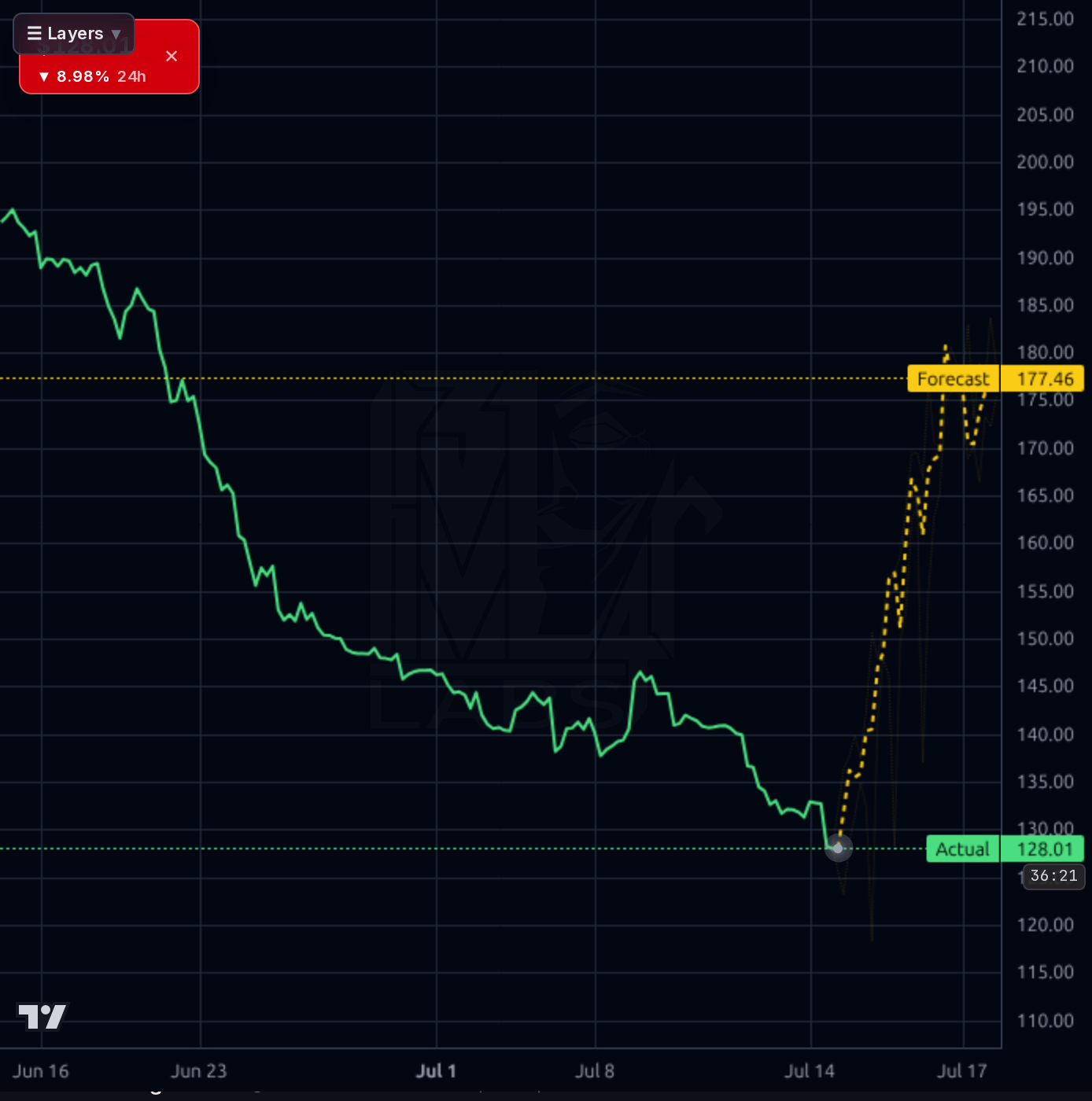
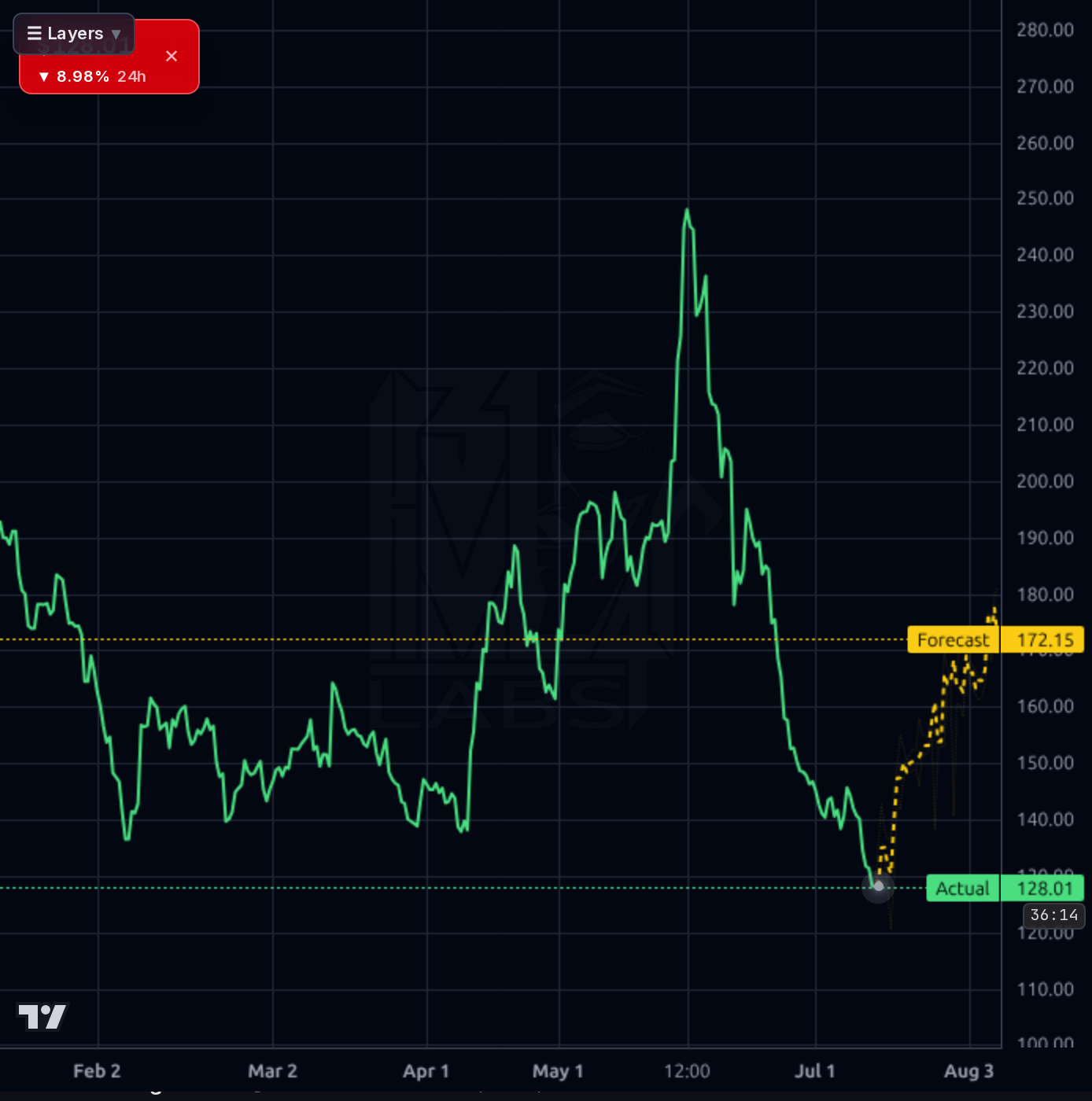
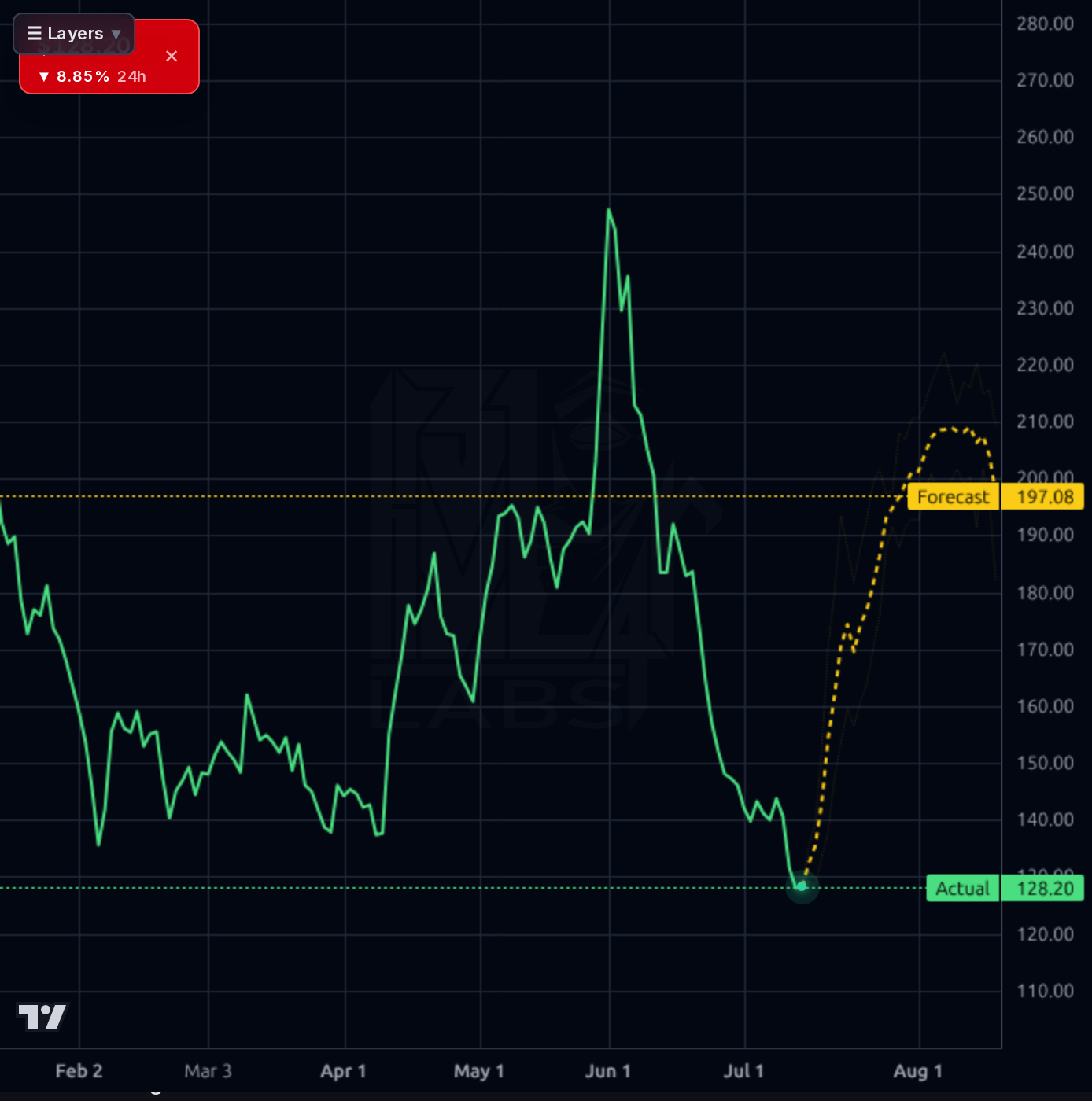
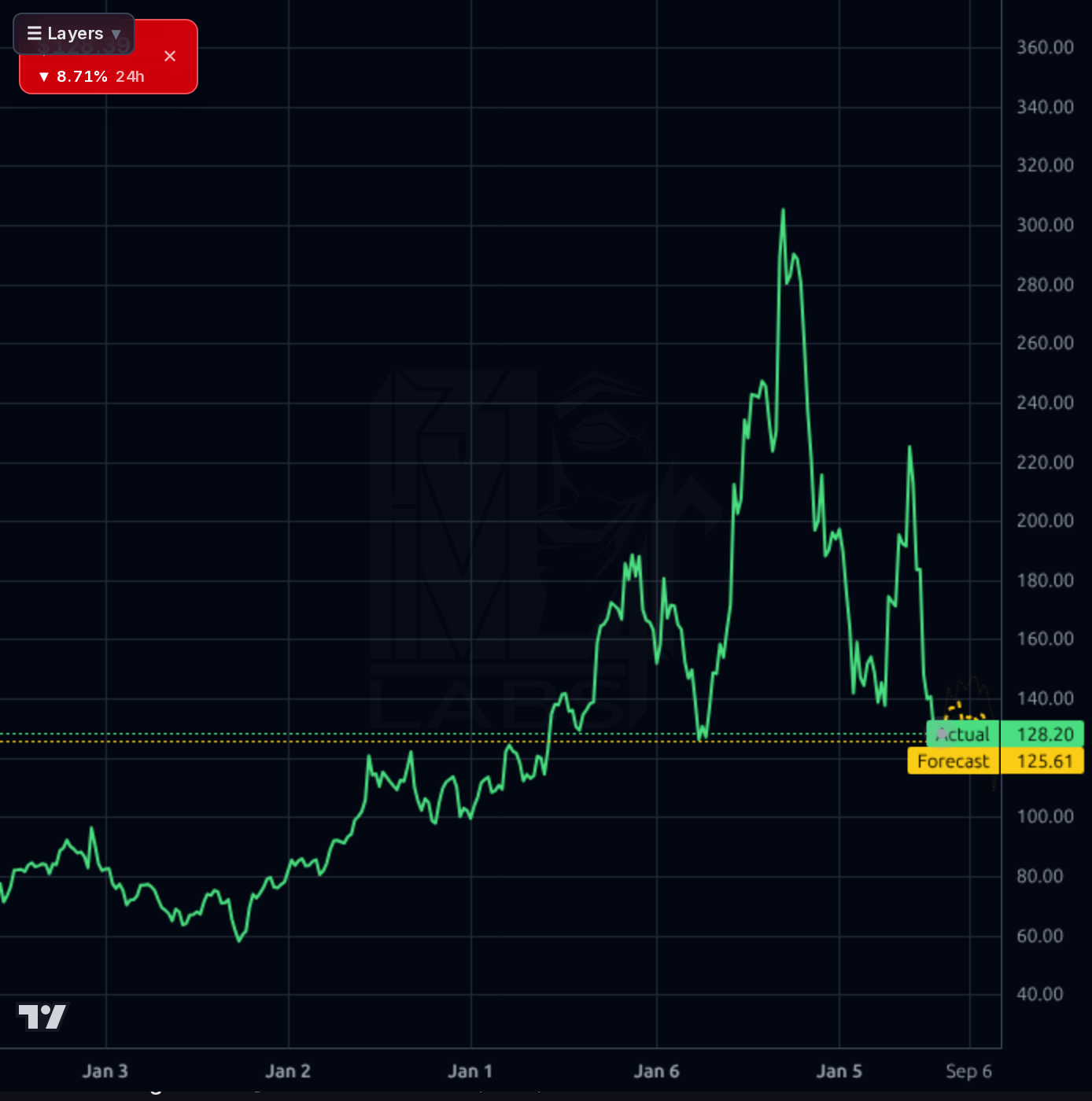
Wait for confirmation above $148-$155 to validate the breakout; if price fails to reclaim this zone, trim positions. Invalidation at $134.57 (52-week low) would signal further downside. Sizing: 5% of portfolio max.
Focus on earnings in September for OCI growth rate and capex moderation guidance. Bullish case requires FCF inflection point (operating cash flow > capex growth) by FY27. Target range $160-$180 if technical breakout occurs; otherwise, hold until confirmation of trend reversal.
Oracle's long-term thesis hinges on converting the $638B cloud backlog into scalable OCI revenue. Structural US data-center capacity shortage favors committed players like Oracle, but credit stress and negative FCF could limit near-term returns. Terminal value depends on successful AI monetization without balance sheet deterioration.
Revenue growth is robust at 17.35% Y/Y TTM, driven by cloud infrastructure expansion, but negative TTM FCF (-$24.5B) and debt-to-equity of 388.87x indicate balance sheet strain. Gross margins remain strong at 63.34%, supported by high-margin ERP/HCM contracts, while operating margins are 33.32%. The $638B cloud backlog provides long-term optionality, but negative FCF and elevated debt create near-term risks. Capital allocation is aggressive with capex exceeding $55B TTM, though the $167B debt level is a major overhang.
The stock is deeply oversold (RSI 32.6) with price below both SMA20 (-11.63%) and SMA50 (-21.44%), trading near its 52-week low ($134.57). The $148-$155 breakdown zone is critical for technical confirmation; failure to reclaim this level invalidates the bullish case. The Kronos AI forecast band shows a narrow high/low range, but directional accuracy is poor (33% vs 92% naive baseline), suggesting limited near-term upside. Support at $134.57 and resistance at $170 (SMA50) define the immediate structure.
The S&P downgrade to BBB- with negative outlook and $167B debt level are major concerns, though investors focus on the $638B cloud backlog. OpenAI's partnership boosts near-term sentiment, but Bank of America's warning about AI-driven electricity shortages introduces a secular risk. The $254.84 target price is overly optimistic given historical target failures and current technical weakness.
- $638B cloud RPO backlog conversion to realized OCI revenue across FY27-28
- OpenAI partnership driving GPT 5.6 Sol model adoption
- IMSA Labs collaboration accelerating AI/motorsport innovation
- S&P BBB- negative outlook with $167B debt level as a major overhang
- Negative FCF (-$24.5B TTM) indicating finite runway if capex does not moderate
- Hyperscaler pricing pressure compressing OCI unit economics pre-scale
Get AI analysis on any stock
This is one of hundreds of Kronos AI reports — scored fundamentals & technicals, bull/base/bear price targets, a multi-horizon plan, and continuously-updated forecasts across the market. Create a free account to explore them all.
Create your free account →Already a member? Sign in · Join our Discord