Clean Energy Fuels: Oversold, Overhyped, and Still Losing Money on Every Gallon
 kev_larFounder & Lead Developer
⚠️ Not financial advice. This post is for informational and educational purposes only. Forecasts and commentary are model outputs and opinions, may be inaccurate, and are not a recommendation to buy or sell any security or asset. Do your own research. AI-assisted: this article was drafted with AI and reviewed by a human before publishing.
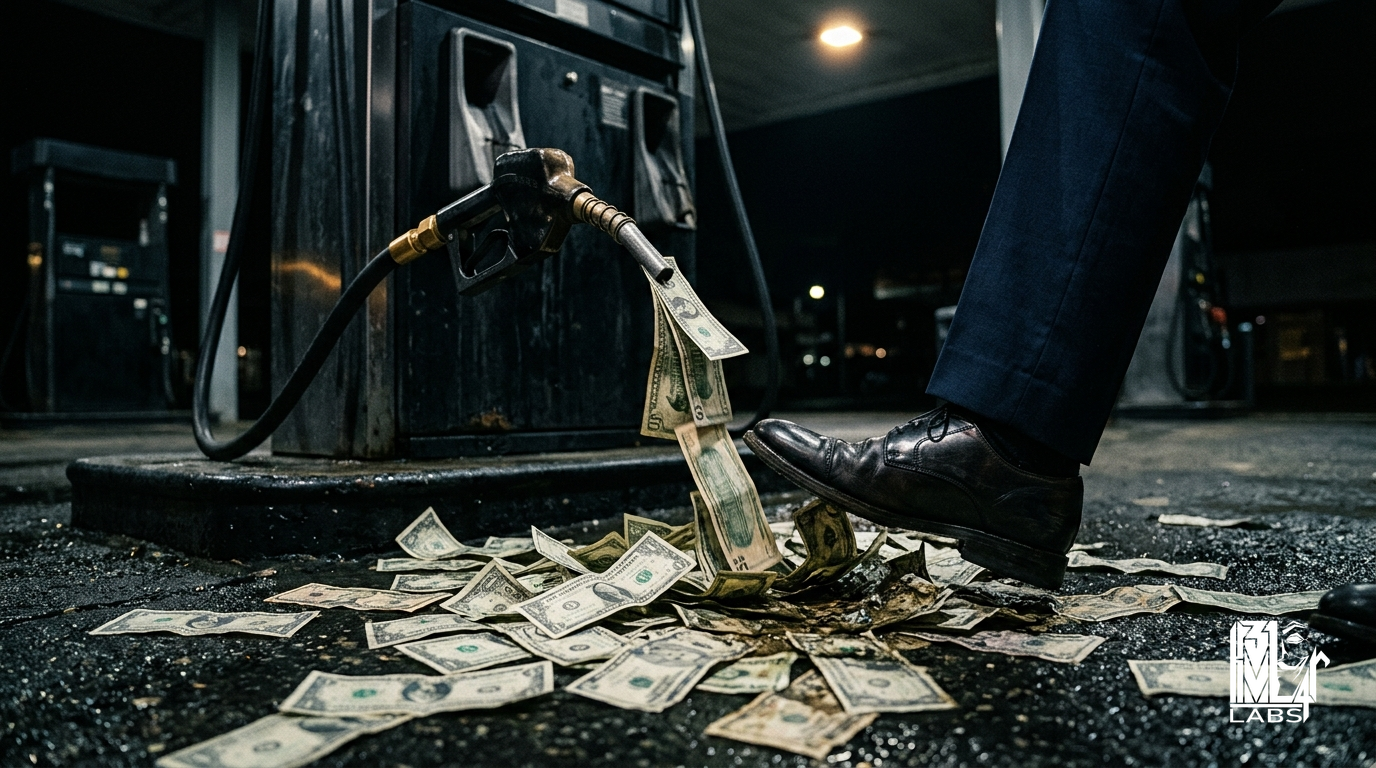 # Clean Energy Fuels: Oversold, Overhyped, and Still Losing Money on Every Gallon
Here's a fun fact about Clean Energy Fuels right now: the more gas it sells, the more money it loses. That's not a typo, and it's not a one-quarter anomaly — it's the business model, and it's exactly why an RSI in the mid-20s should make you curious, not greedy.
Let's start with what actually happened. CLNE reported Q2 2026 earnings on August 6, posting revenue of $106.4 million against $102.61 million a year ago — a real, if modest, beat that topped the Zacks consensus by a couple of points. RNG gallons sold came in at 63.2 million, proof that fleets are still buying what Clean Energy is selling. EPS landed at a penny loss, matching expectations. The stock's initial reaction was electric — a reported 17% pop on the print. That's the kind of headline that gets a small-cap trending on the retail chat boards for a day.
Then reality set back in. The stock has round-tripped hard since, sliding back toward the $2 handle and, depending on which data feed you trust, possibly cracking below the $1.57 support level that had held as a 52-week floor. RSI sitting around 24 tells you the same thing regardless of which exact print you believe: this stock got sold hard, fast, and is now sitting at the bottom of its range looking for a bounce.
And here's where the bulls get excited. Oversold conditions, a revenue beat, fresh leadership (new COO Bartolomeo Frabotta as of June, new President Clay Corbus disclosed in the April proxy), an expanding fueling network aimed at trucking and refuse fleets announced just days before earnings, and a regulatory backdrop — RIN and LCFS credits — that theoretically rewards exactly what CLNE does. Add it up and you get the classic small-cap mean-reversion pitch: beaten-down stock, decent fundamentals underneath, technical setup screaming bounce.
I'd love to buy that story. I just can't, and here's why.
Strip away the RSI chart and look at the balance sheet: $323 million in debt against $57 million in cash. Net margins sit at -21% trailing twelve months. Operating margins are negative too. This is a company that has been "about to turn the corner" on profitability for years, and a 2.57% revenue beat with a penny loss doesn't move that needle — it just confirms the treadmill keeps spinning. One long-term model out there projects CLNE at $2.08 by 2030. Read that again. Four years, essentially flat. That's not a bear thesis, that's the market shrugging.
The credit-dependency piece deserves more attention than it usually gets. CLNE's economics lean heavily on RIN and LCFS pricing — government-set incentive structures that can move against you overnight if political winds shift. That's not a business moat, that's a subsidy dependency, and subsidy-dependent small caps trade exactly like what they are: binary bets on policy continuity.
Then there's the leadership shuffle — a new COO in June, a new President disclosed in April. Maybe that's exactly the operational refresh this company needs. Or maybe it's two changes in a compressed window at a company that hasn't cracked profitability in ages, and you don't get a third data point until Q3 earnings roll around in November. I'd want to see what these new hires actually do before crediting them with a turnaround.
So where does that leave the "buy the dip" crowd? There's a real, technical case for a short-term bounce here — oversold conditions do mean-revert, and CLNE has the volatility profile to snap back sharply on no news at all. But sharp bounces in unprofitable, debt-laden small caps have a bad habit of being violently unreliable — the kind of move that makes for a great screenshot and a lousy cost basis.
My take: this is a trade for people who like adrenaline, not an investment for people who like sleeping at night. Until Clean Energy shows an actual margin inflection — not another gallon-volume headline, but real operating leverage — the chart can flash "oversold" all it wants. Oversold isn't the same as cheap, and cheap isn't the same as good. CLNE right now is all three descriptions fighting for the same two-dollar stock, and I know which one wins.
More on CLNE
Market commentary from the K3vl4r desk — not personalized investment advice. More posts →